• Home
  • About
  • Classes Near You
  • Teaching & Learning
  • Resources at ArtPlantae
  • eBooks: Nature

ArtPlantae Today

Connecting artists, naturalists, and educators

Feeds:
Posts
Comments
« Will Coral write a new book about botanical painting?
Classes, Exhibitions and Special Projects »

Discover Plants of the Chicago Region

December 14, 2012 by ArtPlantae Today

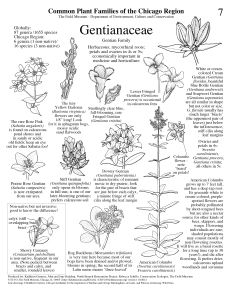
Image courtesy of Kathleen Garness. All rights reserved

Image courtesy of Kathleen Garness. All rights reserved

This week we have the good fortune to learn from Kathleen Garness, a scientific illustrator in Illinois whose botanical illustrations are being used to encourage an interest in native plants in the Chicago area. Kathleen has graciously stopped by to discuss her current projects.


    ArtPlantae
    : How did you become involved in the Chicago plant families project?

    Kathleen: I have become passionate about the need for natural areas restoration since joining the Chicago Botanic Garden’s Plants of Concern rare plant monitoring program in 2001. Plants of Concern (POC) uses a nationally-acclaimed systematic scientific protocol that records data about the species, its associates, threats to the population and land management history. Right now I am responsible for monitoring about 40 populations of 26 rare species at ten different sites in four counties in our region, reporting our findings to the Chicago Botanic Garden and the landowners.

    Why? Our rare, and even common, native species are being crowded out by non-native shrubs such as European buckthorn and herbaceous plants such as garlic mustard and teasel. Because of this, we are losing our valuable pollinators, and if we allow this trend to continue it will have disastrous economic and nutritional impacts on our well being, not to mention the tragic loss of so much of our botanical natural heritage.

    Several years ago I had been asked to consider “adopting” one of my monitoring sites, Grainger Woods, since it did not have a steward, and they hoped that restoration efforts would be able to keep it nearly pristine. Two years ago we achieved the highest level of natural areas protection afforded by the state. Now, over half of the site is an Illinois dedicated nature preserve. Grainger Woods has over 300 species of plants and is an important bird study area for Lake County IL, because the rare red-headed woodpecker has been known to nest there. One Saturday morning every month, in addition to our POC work (which may involve one or more extensive surveys per season per species and site) we clear the area of invasive non-native trees, shrubs or herbaceous plants.

    While the Chicago region is arguably the nation’s leader in natural areas restoration, our biennial Wild Things conference draws well over a thousand attendees from the region. Many volunteers lack a depth of botanical knowledge that, a hundred years ago, used to be an essential part of every high school curriculum. But now, this knowledge is in danger of being lost entirely. And many site managers and stewards don’t have the time to train their volunteers about the finer points of plant taxonomy, even if they felt it would be valuable. So one of the region’s leaders, Barbara Birmingham, a retired science teacher, has been trying to address that deficit by offering monthly field botany classes at her site every year for the past three years. She asked me to assist her in developing new materials, and since each month she focused on a different common plant family, and would be using these materials in coming years, I felt this was a worthwhile use of my skills and time.

    As the project evolved, we realized this could be useful region-wide, so I enlisted the help of many local scientists and stewards, emailing them the pages for their comments, according to their area of specialty. Chicago Botanic Garden’s Plant Conservation Manager of Regional Floristics, Susanne Masi, who co-authored The Sunflower Family in the Upper Midwest, edited the Asteraceae pages; Stephen Packard, director of Audubon Chicago Region and Kenneth Robertson from the Illinois Natural History Survey, contributed to the Rosaceae; and many others contributed to the rest of the series. John Balaban, one of the original Cook County North Branch stewards, and Rebecca Collings provided dedicated support from the Field Museum of Natural History here in Chicago. We are more than halfway through the project, having completed fourteen of the twenty-six most common plant families here. (Rebecca and I first become acquainted when I was asked by their botanist Bil Alverson to assist with Keys to Nature Orchids.

    The Field Museum provided the template, which was consistent with the other Rapid Color Guides they had already developed. We worked together as a team to come up with the design and content for each page, which I wrote and illustrated. We chose species that restoration volunteers might easily come across, as well as a few that are invasive or of special concern, to watch out for and report. Since we have so much biodiversity in our region, it was hard to choose, and for that I was very grateful for the team approach. Some of the families, such as the gentians and arums, were able to be completed in one page — the others were just an overview. We also wanted to suggest some of the important ecological relationships plants have to animals and used Milkweed Metropolis as that one example.


    ArtPlantae
    : What are the goals of this project? How do the project sponsors – The Field Museum – plan to use this information?

    Kathleen: We will be promoting the pages next February during the
    Wild Things Conference at the University of Illinois at Chicago. The Field Museum will be giving their ecology students the pages as handouts this next field season, and providing the link to the pages so that folks can also access them via mobile technology such as smartphones or digital tablets. Stewards will be able to use them as handouts in their field botany walks and restoration instructions, too.

    And I feel a clarification is in order here – by no means are they intended to replace field guides or taxonomic keys. Rather, they are a quick visual way for folks new to natural areas exploration or restoration to begin to familiarize themselves with botany basics, not feel so intimidated by the diversity our area offers, and maybe eventually purchase a field guide such as Peterson’s or Newcomb’s. So they are intended to complement the use of field guides, providing a quick visual identification to family; from there an unknown plant can hopefully be keyed to species using a field guide or an online resource such as the USDA PLANTS Database or Flora of North America. The page set also includes a short glossary.


    ArtPlantae
    : Do you envision other uses for this guide?

    Kathleen: We have shown them to regional scouting program leaders and
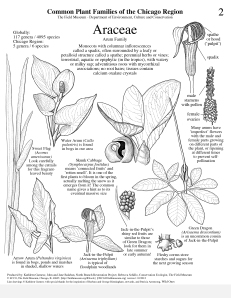
    Image courtesy of Kathleen Garness. All rights reserved

    Image courtesy of Kathleen Garness. All rights reserved

    high school science teachers, and some teachers are providing them to their classes for extra credit work. We would be thrilled to offer them to Mighty Acorns, a junior naturalist program sponsored by the Cook County Forest Preserve. Recently, the American Society of Botanical Artists graciously awarded me the Anne Ophelia Dowden grant for 2013, with which I will be able to offer art classes and distribute sets of materials, including these plant family pages, to five regional community centers, as outreach to underserved populations. These pages have sort of taken on a life of their own, now!


    ArtPlantae
    : You have mentioned in the past that there needs to be a grassroots effort to help people “make the connection between plants and well-being.” From what you’ve observed through your work with the public, where would be a good place to start?

    Kathleen: Well, we’re hoping these materials will begin to assist with this! For the last twenty years or so, there has been a groundswell of interest in natural areas restoration, organic gardening, urban horticulture, even beekeeping, not just regionally or nationally, but worldwide. Well before this, the Midwest was blessed with being the epicenter of the ecology movement, through the pioneering work of famous naturalist Robert Kennicott, who worked for the Smithsonian Institution and was a founder of the Chicago Academy of Sciences; Stephen Forbes, who was the first head of the Illinois Natural History Survey; Henry Chandler Cowles, University of Chicago, today considered the father of ‘dynamic ecology’; Aldo Leopold; and the tireless May Theilgaard Watts, who was one of Morton Arboretum’s most famous naturalists. These intrepid naturalists got out into the field every day, marveled at the wonders of nature, made careful observations, and inspired several generations that followed. So this generation, I feel, is standing on the shoulders of giants, and we need to keep the momentum going – we need to get folks outside, to have them experience the beauty of nature firsthand on a regular basis, but also provide them the tools to really SEE and appreciate what they are looking at. That is the goal of my current botanical illustration work and I see no proper end to it. I hope artists and naturalists in other regions see the value in this and do it for their communities too.


    ArtPlantae
    : You are working on another project in which economic botany and ornamental horticulture are the focus. What are the educational objectives of this project?

    Kathleen: The Oak Park Conservatory, where I am Artist-in-Residence until November 2013, has also engaged me to make similar materials about the plants in their tropical greenhouses. So far I have completed two sets – cacao and poinsettias – of the eight sets commissioned, and am now starting on the cacti and succulents. These are not family pages per se because each set’s scope is broader than just one family. I also interact with the Conservatory visitors, show them how a botanical artist works, chat about the various collections if they’re interested, and will hopefully complete my tenure there with an exhibit of new watercolors!


    ArtPlantae
    : You are doing wonderful work, Kathleen. Thank you for spending time with us this week.


More About the Field Guide

The pages of Common Plant Families of the Chicago Region are standard 8.5″ x 11″ pages and fit easily into a 3-ring binder. Since they are a standard size, the pages are also easy to laminate. Users of this guide may be interested in creating their own color-coding system while learning the features of each plant family (similar to what is used in Botany Illustrated).

Featured in this guide are the following plant families:

  • Apiaceae (Parsley Family)
  • Araceae (Arum Family)
  • Asclepiadaceae (Milkweed Family)
  • Asteraceae (Sunflower Family)
  • Brassicaceae (Mustard Family)
  • Fabaceae (Legume Family)
  • Gentianaceae (Gentian Family)
  • Lamiaceae (Mint Family)
  • Liliaceae (Lily Family)
  • Onagraceae (Evening Primrose Family)
  • Orchidaceae (Orchid Family)
  • Ranunculaceae (Buttercup Family)
  • Rosaceae (Rose Family)
  • Scrophulariaceae (Snapdragon Family)

A glossary of botanical terms is also included with the guide.

The guide Common Plant Families of the Chicago Region is available online for free.


About Kathleen Garness

The botanical/scientific illustration certificate program at Morton Arboretum was the turning point for me. While I had painted watercolors of tropical orchids for many years previous, the classes at Morton refined my pen and ink skills and fueled an interest in learning about and documenting local native species.

I really enjoy my work as a volunteer natural areas steward for Grainger Woods. My two passions – preserving habitat and documenting native species – seem to feed off each other. In 2008 my colleague Pat Hayes and I were surprised with a Chicago Wilderness Grassroots Conservation Leadership Award for our work in developing educational materials for youth as part of the national Leave No Child Inside initiative.

What feels like an eon ago, I served as board member and president of the historic Palette and Chisel Academy of Fine Arts in Chicago, and am still currently active in several local and national arts organizations. One of my most exciting opportunities, though, was the acceptance of one of my paintings into the Shirley Sherwood Gallery, Kew Gardens, London, as part of Losing Paradise? Endangered Plants Here and Around the World and in the 2011 edition of Smithsonian in Your Classroom.

I am the mother of one son, Ian Halliday, who encouraged me in this work by buying me a Wacom tablet one year for Christmas when he saw me laboring over my other avocation, the illustrations for the Little Gospels, published by Liturgy Training Publications for the Catechesis of the Good Shepherd curriculum. I still have to figure out how the Master’s in Religious Education and 20+ years teaching Sunday school figures into the artist side of me, but it all seems to fit somehow!


Additional Information About Plants of the Chicago Region

  • Online keys to plants, animals and fungi of the Chicago Region
  • Making Connections and Inspiring Action to Preserve America’s Prairies

Share this:

  • More

Like this:

Like Loading...

Posted in botanical art, botanical illustration, Education, general botany, Learning Opportunities, natural science illustration, Reference | Tagged botany, Chicago, education, nature, Plants, teaching & learning |

  • Search Archives

  • Feature Scholar

    Katie Zimmerman has spent years researching Victorian naturalist and artist, Marianne North. She discusses her work this month and answers your questions.

    Join the conversation

    Photo:
    © Katie Zimmerman
    All rights reserved

  • What Readers Are Reading Now

    • Create a Mixed-Media Sketchbook for Summer
    • Draw Plants Outdoors, Hike & Have Fun This Summer
    • Classes Near You!
    • California
    • A Personal Look at the Life of Botanical Artist Rory McEwen
  • Recent Comments

    • ArtPlantae Today on ‘From the Mountains to the Sea’ Begins Year-long Tour
    • EAJanes on ‘From the Mountains to the Sea’ Begins Year-long Tour
    • ArtPlantae Today on Scholar Discusses Artist Marianne North, Answers Your Questions
    • ArtPlantae Today on Paint Summer Flowers on Vellum at Chicago Botanic Garden
    • Jane Saunders on Paint Summer Flowers on Vellum at Chicago Botanic Garden
  • How to Follow Us

    Click the "Follow" tab or
    Join ArtPlantae Mailing List

  • Up to 50% Off

    At Aurea Vista. Click for map.

  • Suggestion Box

    Questions for "Tips & Tools"
    Suggest a topic for discussion Click Here

  • Twitter Updates

    • Draw Plants Outdoors, Hike & Have Fun This Summer wp.me/p5EAv-7PH 21 hours ago
    • Botanical Drawing for Teens & Adults at Brenton Arboretum (@brentontrees) in #Iowa. wp.me/p5EAv-7PV 21 hours ago
    • Create a Mixed-Media Sketchbook for Summer wp.me/p5EAv-7Nu 22 hours ago
    • We've had a great history lesson about Marianne North this month. What else do you want to know? ow.ly/i/28XHr 4 days ago
    • The Botany Craft Bar launches at the Spring Open House @AureaVista. We're drawing food and kitchen items tonight. ow.ly/i/28Xjc 4 days ago
  • Ask The Artist

    Wendy Hollender (interview)
    Wendy Hollender
    Gilly Shaeffer (interview)
    Today's Botanical Artists
    Society of Botanical Artists
    Billy Showell (interview)
    Billy Showell
    Sarah Simblet (webinar)
    Robin Brickman (interview)
    Mark Granlund (office hours)
    Wendy Hollender (webinar)
    Diane Cardaci
    Katie Lee (webinar)
    Bruce L. Cunningham (webinar)
    Jane LaFazio (interview)
    Jane LaFazio
    Mally Francis (interview)
    Kandis Elliot
    Anne-Marie Evans
    Margaret Best
    Elaine Searle
    Mindy Lighthipe
    Niki Simpson
    Anna Knights
    Helen Allen
    Birmingham Society of
    Botanical Artists

    Hazel West-Sherring
    John Muir Laws
    Martin J. Allen
    Institute for Analytical Plant Illustration
    Mairi Gillies
    Georgius Everhardus Rumphius
    Liz Leech
    Valerie Littlewood
    Heeyoung Kim
    Linda Ann Vorobik
    Shawn Sheehy
    Gary Hoyle
    Mariella Baldwin
    Coral Guest
    Anita Walsmit Sachs
    Ruth Ava Lyons
  • Teaching & Learning

    Seeing with Graphite Eyes

    Students Overcome Their Fear of Drawing in Botany Lab

    Eradicating Plant Blindness in the 21st Century

    Using Social Media to Gather Feedback About Student Interest in Natural Resource Management

    How to Draw Plants for Documentation

    Investigating the Drawing Process

    Making Students Aware of Errors During the Drawing Process

    How do you grade a sketch?

    Helping Teachers Turn Observers Into Naturalists

    Empowering Children to Know What They Know Through Art

    Lesson Plans in Botanical Art & Plant Conservation

    Anne Marie Evans Discusses Teaching, Learning & Botanical Art

    The Timeless Value of Naturalist Journals

    An Interdisciplinary Approach to Learning the Power of Plants

    Margaret Best Discusses Color in Botanical Art, Provides Tips for Informal Science Educators

    Generating Interest in Boring Subjects

    Public Perception of Botanical Gardens

    Quality Observation is the Common Denominator in Art & Science

    Botanical Wall Charts in the Classroom

    Lesson Plans in Botanical Illustration

    Practical Drawing as a Thinking Tool

    Visualizing Plants with Botanical Symbols

    Does experience in the arts lead to academic achievement?

    The Value of Words Over Botanical Illustration

    Biologist Learns to Draw Plants, Sees with New Eyes

    Visualizing Life Cycles & Ecosystems

    Niki Simpson Introduces Digital Composite Botanical Illustrations to Botanical Art

    Imagery in Scientific Communication

    The Last Botany Student in the UK

    Humans First. Then Animals. Then Plants.

    The Origin of Botanical Field Guides

    User-friendly Identification Tools for Plants & Animals

    Students Take First Step Towards Creating Unique Florilegium

    Make Students Better Observers This School Year

    The Botanical Artist as Naturalist

    Remember That Plant You Saw?

    The Arts & Everyday Learning

    Why Integrating the Arts into the Classroom May Improve Content Retention

    Watercolors of the Herbs of Britain Provide Framework for Dichotomous Key

    Learning with Journals, Notes and Scrolls

    What makes plants interesting?

    Ecoliteracy Curriculum Emphasizes Plant Restoration, Natural Dyes

    Educational Wall Charts Teach Less, Better

    Plant Identification & Environmental Literacy

    Outdoor Education & Plant Blindness

    Scholars Study Images in the Service of Science

    Botany Program for Botanical Artists Launched in UK

    Olcani: When Plants Are Medicine

    Botany Education in the 18th Century

    Thoughtful Observation

    What do textbooks teach us about plants?

    Drawing Plant Life Cycles

    Painting Hawaii's Endangered Plants

    Researchers Study Renaissance Herbals to Preserve the Botanical Tradition of the Ancient Mediterranean

    Scientific Illustration in the Elementary School Classroom

    How Textbooks Contribute to Plant Blindness

    The Botanical Drawings & Discoveries of Joseph Hooker

    The History of Botany in the US

    Seeing Plants Equally

    How to Observe the Life Histories of Plants

    Bringing Plants to the People

    Measuring Attitudes Towards Plants

    Create Your Own Florilegium

    Georgius Everhardus Rumphius, Soldier & Naturalist

    Rumphius: A Naturalist for the People

    Inside 'The Ambonese Herbal'

    What Don't People Know About Plants

    Kitchen Counter Botany

    Plants, Pollinators & Art

    Guided Exploration of
    Nature's Palette

    Teaching About Plant-Pollinator Relationships

    Botanical Illustration & Plant Morphology for Preschoolers

    Nature Artists in the Classroom

    Science Communication Through Art

    How to Integrate Art Across the Curriculum

    Art, Botany & Society: Plants in the Limelight

    Using Writing to Encourage Drawing

    How can botany lessons be more exciting?

    Do Botany & Art Need Each Other?

    Mapping the Trees of
    Central Park

    Scientific Illustration in Kindergarten

    The Origins of Botany Education in the US

    Drawings Reveal How Teachers View the Environment

    Informal Botany Education Can Improve Plant Recognition Skills

    Using Dioramas to Teach Biology

    College Students' Knowledge of Plants

    Examples of How Biology & Art Influence Each Other

    No, Can't Don't

    Quick & Easy Lesson in Observation

    Illustrations & The Environment

    A Guide to Biological Illustration

    Classroom Project Integrates Plant Science and Art

    Engagement, Understanding, Communication

    Doodles, Learning & Attention Span

    Thinking on Paper

    How Children Respond to Nature

    Use Trading Cards to Teach Natural History

    Preschool Botany: Play, Explore, Draw

    Botanical Scavenger Hunt Develops Science Communication Skills

    How to Use a Pencil

    How can we experience plants differently?

    Keep Plants Simple

    Seeing Trees: In Print & Digitally

    GPS Technology & Botanical Art

    Does technology make the outdoors more appealing?

    Drawing & Learning in 1861

  • Exhibits To Visit

    Add your exhibition to this list!
    (send info, media image)

    John Muir and the Personal Experience of Nature
    Riverside Metropolitan Museum
    Riverside, CA
    Dec. 2, 2012 - Jan. 19, 2014


    Opening in 2013

    Windows on Evolution:
    An Artistic Celebration of Charles Darwin

    Virtual Exhibition (online)
    Science Art-Nature
    February 12, 2013

    Where They Grow Wild (at Rancho Santa Ana Botanic Garden)
    Rancho Santa Ana Botanic Garden
    Claremont, CA
    March 9 - June 9, 2013

    Extended to July
    Where They Were Wild: Recapturing California's Wildflower Heritage
    Huntington Library, Art Collections and Botanical Gardens
    San Marino, CA
    March 9 - July 8, 2013

    Jane Pinheiro Remixed: Reprints of Rare, Mid-Century Wood Blocks in the Theodore Payne Foundation Collection
    Theodore Payne Foundation for Wild Flower and Native Plants
    Sun Valley, CA
    March 15 - June 22, 2013

    What We Collect: Recent Art Acquisitions, 2007-2012
    Hunt Institute for Botanical Documentation
    Carnegie Mellon University
    Pittsburgh, PA
    March 22 - June 30, 2013

    The North American Experience: Early America Illustrated
    with Forms of Life Art Exhibition by the 5300 Group

    Lloyd Library and Museum
    March 25 - June 21, 2013

    Learning from Leaves
    Arnold Arboretum
    Harvard University
    Boston, MA
    April 6 - June 9, 2013

    The Nature of Jewelry: Botanical Design & Symbols
    Peninsula School of Art
    Fish Creek, WI
    April 19 - July 13, 2013

    Botanical Art in the Third Millenium
    Museo della Grafica
    Pisa, Italy
    April 20 - July 15, 2013

    Nature Unfurled
    Temple of Minera
    Hardwick Park
    Sedgefield, County Durham
    England
    April 24 - June 5, 2013

    Following in the Bartrams' Footsteps: Contemporary Botanical Artists Explore the
    Bartrams' Legacy

    Bartram's Garden
    Philadelphia, PA
    April 26 - May 24, 2013

    NEW
    From the Mountains
    to the Sea

    Duxbury Art Complex
    Duxbury, MA
    May 19 - September 8, 2013

    Society of Floral Painters 2013 Exhibition
    National Trust Property
    The Vyne
    Hampshire, England
    June 1-23, 2013

    From the Mountains
    to the Sea

    Montshire Museum of Science
    Norwich, CT
    September - November 2013

    Following in the Bartrams' Footsteps: Contemporary Botanical Artists Explore the
    Bartrams' Legacy

    South Florida Museum
    Philadelphia, PA
    September - December 2013

    When They Were Wild: Capturing California’s Wildflower Heritage
    The Huntington Library, Art Collections, and Botanical Gardens
    Expected 2013


    Opening in 2014

    From the Mountains
    to the Sea

    Bartlett Arboretum Gardens
    Stamford, CT
    January - March 2014

    Following in the Bartrams' Footsteps: Contemporary Botanical Artists Explore the
    Bartrams' Legacy

    Cherokee Garden Library/Atlanta History Center
    Atlanta, GA
    March 1 - May 31, 2014

    From the Mountains
    to the Sea

    Bedford Public Library
    Bedford, MA
    March - May 2014

    From the Mountains
    to the Sea

    Audubon Environmental Education Center
    Bristol, RI
    May - June 2014

    From the Mountains
    to the Sea

    Coastal Maine
    Botanical Gardens
    Boothbay, ME
    August - September 2014

    Add your exhibition to this list!
    (send info, media image)

  • Nature Near You

    Global Directory of Botanical Gardens
    Botanic Gardens Conservation International
    Search for a Garden

    National Park Service
    Search for national parks at the National Park Service website.www.nps.gov

    National Environmental Education Foundation's Nature Center Guide.
    Find Your Nature Center

    Rails-to-Trails
    Find a trail for hiking, walking, cycling or inline skating. The Rails-to-Trails Conservancy and its volunteers work to convert unused railroads into trails for healthful outdoor activities.
    Search their national TrailLink database to locate a trail near you.

    Sierra Club Trails
    Locate trails for hiking, cycling, climbing, and many other outdoor activities.
    Search Sierra Club Trails

    Disclosure

  • Contact Info:


    Mailing Address:
    ArtPlantae LLC
    5225 Canyon Crest Drive
    Ste 71-127
    Riverside, CA 92507
    Email: info@artplantae.com Phone: 951.776.4696

    ArtPlantae at Aurea Vista
    3498 University Avenue
    Riverside, CA 92501
    More Info
  • © 2007-2013 by ArtPlantae LLC. All rights reserved. Unauthorized use and/or duplication of this material without express and written permission from this blog’s author and/or owner is strictly prohibited. Excerpts and links may be used, provided that full and clear credit is given to ArtPlantae LLC and ArtPlantae Today with appropriate and specific direction to the original content. Artists retain the copyright to their work. The ArtPlantae® logo is a registered trademark of ArtPlantae LLC.
  • Nature Blog Network

Blog at WordPress.com.

Theme: MistyLook by WPThemes.


Follow

Get every new post delivered to your Inbox.

Join 2,926 other followers

Powered by WordPress.com
loading Cancel
Post was not sent - check your email addresses!
Email check failed, please try again
Sorry, your blog cannot share posts by email.
%d bloggers like this: